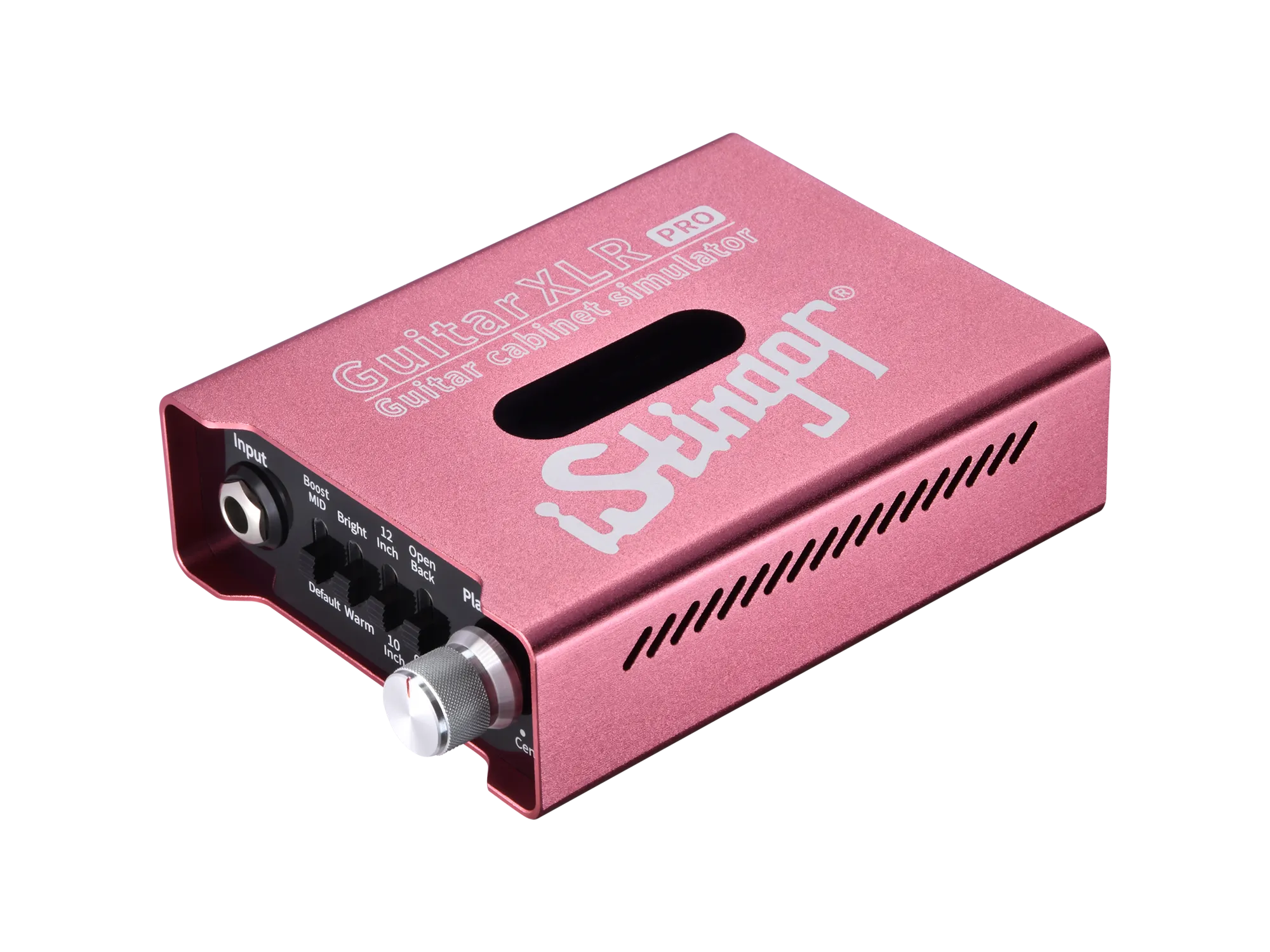
Product Overview
The GuitarXLR is a pure analog cab simulator with ECC83 tube amplification, delivering a warm, realistic, recording-ready tone.
Core Features
iStingor Products
The GuitarXLR is a pure analog cab simulator with ECC83 tube amplification, delivering a warm, realistic, recording-ready tone.
Core Features
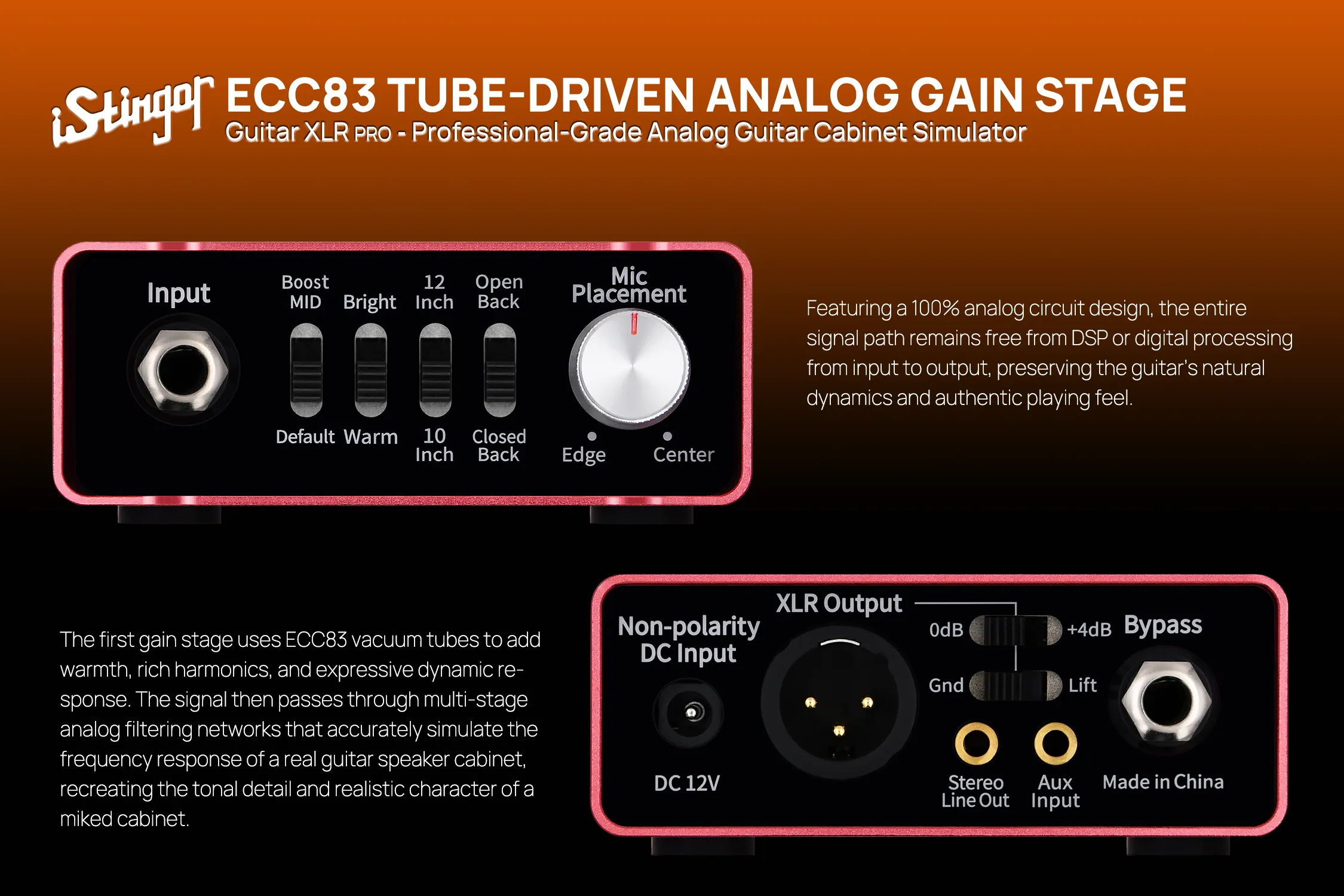
The GuitarXLR pro is designed as a professional-grade guitar cabinet simulator for recording, live performance, and rehearsal situations. It simulates the frequency response of a guitar speaker cabinet, allowing guitarists to achieve a cabinet-like sound without using a real speaker cabinet and microphone. It is suitable for direct connection to recording systems, mixers, audio interfaces, and other sound reinforcement equipment.
Unlike digital IR or DSP-based cabinet simulation, the GuitarXLR pro uses a 100% pure analog circuit design with no DSP processing in the signal path. The signal passes through a carefully tuned series of analog filtering networks to create the distinctive iStingor cabinet response. The first-stage amplification uses an ECC83 tube, adding warmth, thickness, and more natural harmonic character to the guitar sound, helping the direct signal avoid sounding overly harsh, thin, or sterile.
The GuitarXLR pro also provides multiple cabinet and tone switches for fast sound adjustment across different setups. Boost MID adds mid-frequency thickness for a fuller tone; Bright/Warm switches between a brighter or warmer tonal character; 12 Inch / 10 Inch simulates different speaker size responses; and Open Back / Closed Back changes the cabinet character between open-back and closed-back styles. These controls allow players to shape cabinet tone quickly while preserving an analog and realistic playing feel.
The Mic Placement knob simulates changes in microphone position. Turning the knob counterclockwise moves the virtual microphone toward the speaker edge, usually resulting in a warmer and smoother tone. Turning it clockwise moves the microphone toward the speaker center, usually creating a more direct, brighter, and more focused sound. This allows users to achieve different mic-position tonal characteristics without physically setting up a microphone.
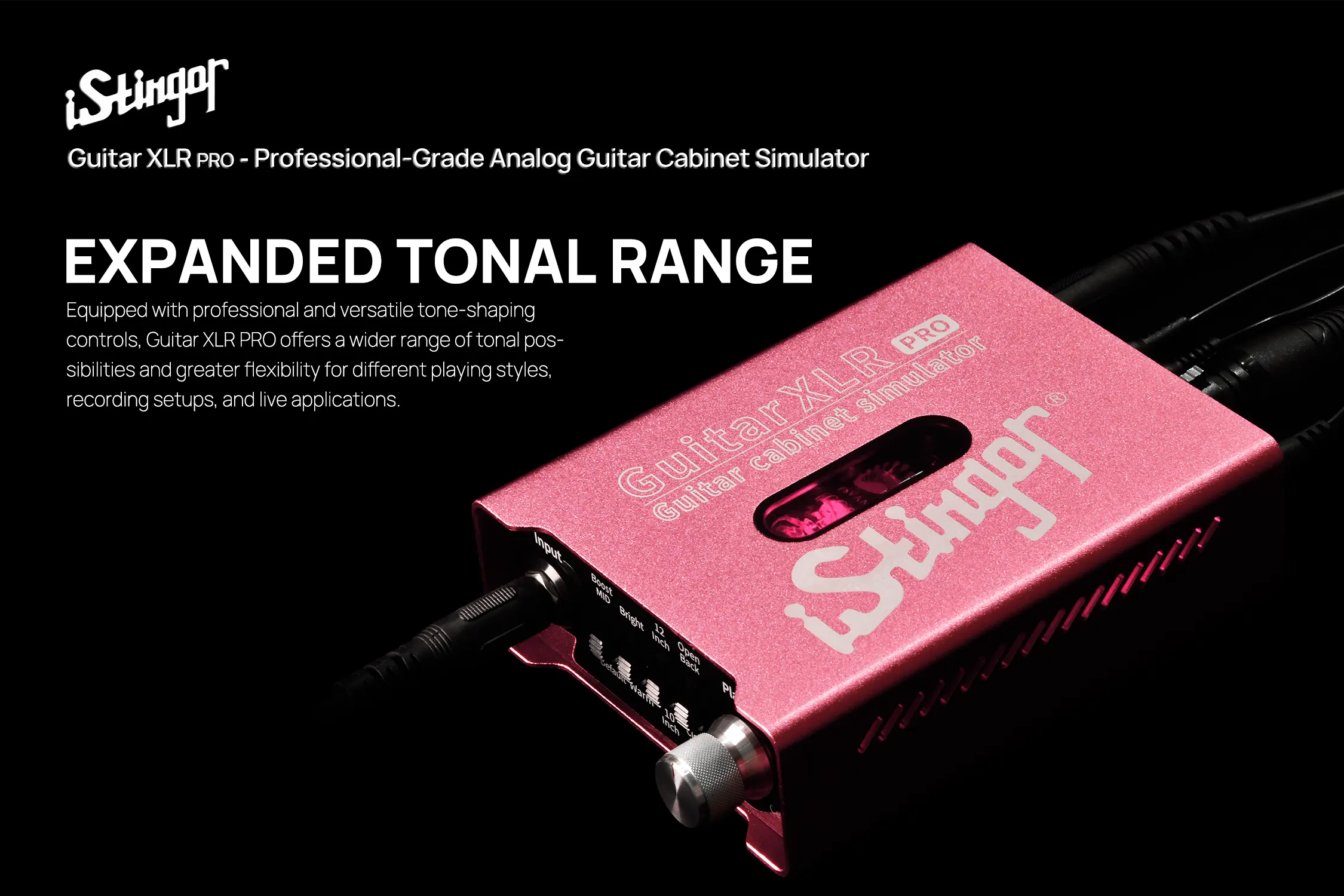
The rear-panel connectivity of the GuitarXLR pro is designed for multiple real-world applications. The XLR Output provides a balanced signal for connection to PA systems, mixers, audio interfaces, and recording equipment. The output level can be switched between 0dB and +4dB to match different recording or sound reinforcement systems. A GND / Lift switch is also provided to help reduce system ground loop noise when using the balanced output. For live and recording environments that require a stable, clean, and controllable direct signal, the balanced XLR output is one of the most important features of the unit.
The Stereo Line Out can be used as a stereo line output and is capable of driving 16–32Ω headphones, making it useful for silent practice, monitoring, or connection to other line-level devices. The Aux Input allows accompaniment signals to be connected for practice. The accompaniment signal is mixed with the guitar signal and sent through the Stereo Line Out, but it is not mixed into the balanced XLR output. This makes the feature practical for personal practice while keeping the main balanced output focused on professional guitar signal use.
The Bypass output is the bypass signal from the INPUT jack and can be used to connect to a guitar amplifier. This gives players more flexible system routing. For example, in recording, the XLR output can be sent directly to an audio interface while the bypass output feeds a guitar amplifier. On stage, the balanced output can be sent to the PA system while the bypass signal is used for a traditional amplifier monitoring setup.
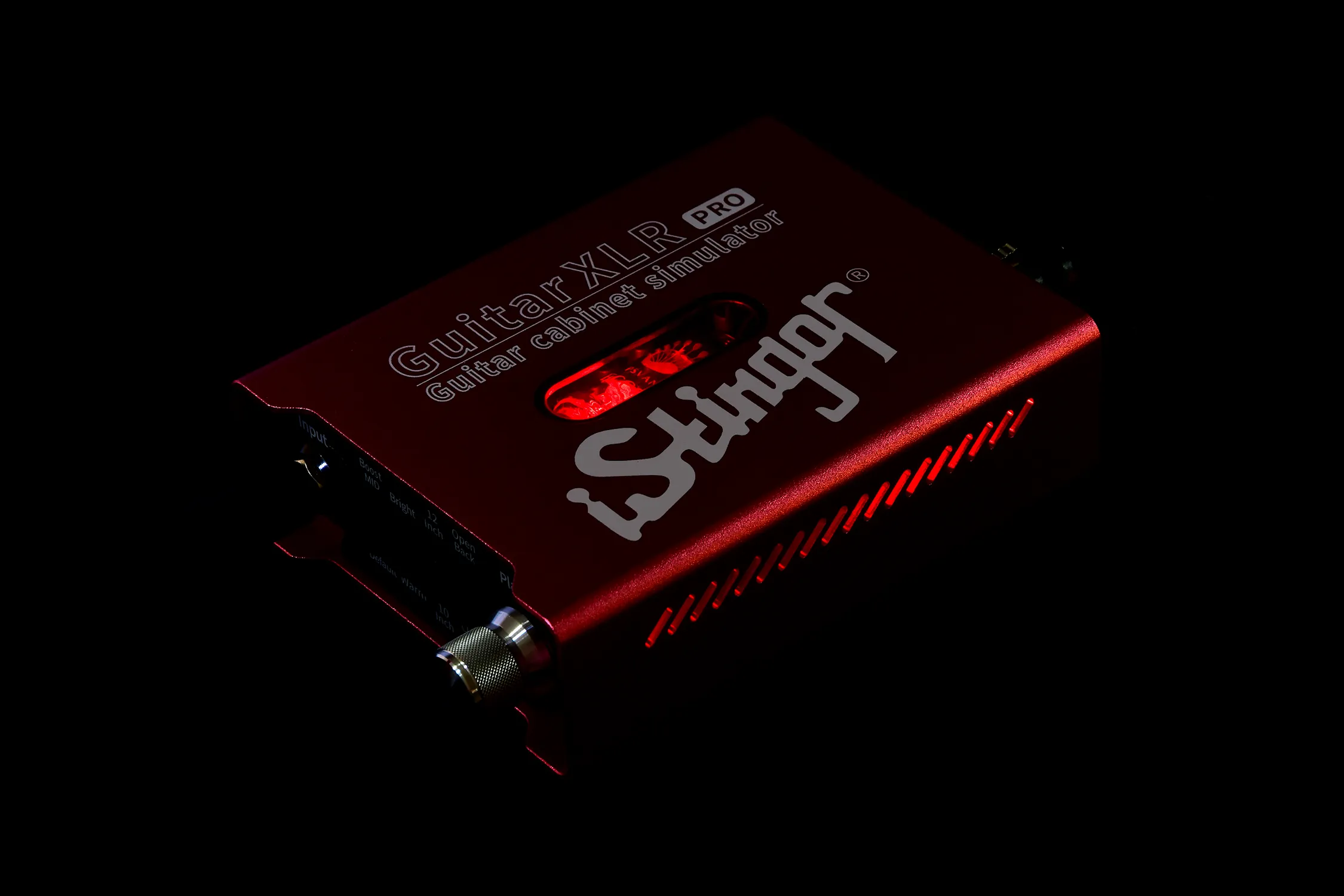
For power and reliability, the GuitarXLR pro uses a 12V2A DC power supply and features a non-polarity DC input design, allowing the device to automatically convert adapter polarity. The overvoltage protection threshold is 13.5V±0.5V, and exceeding this voltage will trigger protection mode to help prevent damage caused by non-standard power adapters. Because the device uses a vacuum tube, it requires approximately 10 seconds of warm-up after power-on, during which input and output signals are disabled. The unit also features a power-on/off anti-impact function to reduce pops, bursts, or potential impact on downstream equipment. Since the internal tube generates heat during operation, the device should be used in a well-ventilated environment, and the bottom and side vents should not be blocked.
SPECS
Cabinet Simulator
GuitarXLR pro
470 kΩ
10 kΩ
10 Ω
1.2 kΩ
10 kΩ or greater
-20 dBu
-20 dBu / +4dB
95 dB (1kHz, 0dBu, A-Weighted)
AC Adaptor, Output DC12V 2A
1.3 A
370 mA ± 10 mA
97(W) × 140(D) × 39(H) mm
335 g
INSTRUCTIONS